
 QFM
QFM
19 November 2026, 9:45 am
By Frank Oyugi
Lira City — Behind the 1920s-era walls of Lira Regional Referral Hospital, doctors are fighting a silent war on two fronts: a rapidly rising burden of chronic illnesses and a Shs 8 billion funding gap that threatens lifesaving care for 2.6 million people across Northern Uganda.
While the facility has made notable gains in diagnostic capacity and local revenue generation, disclosures to Parliament reveal a regional referral centre under severe strain, operating with less than a third of its required workforce and less than half the funding needed to stock its pharmacy.
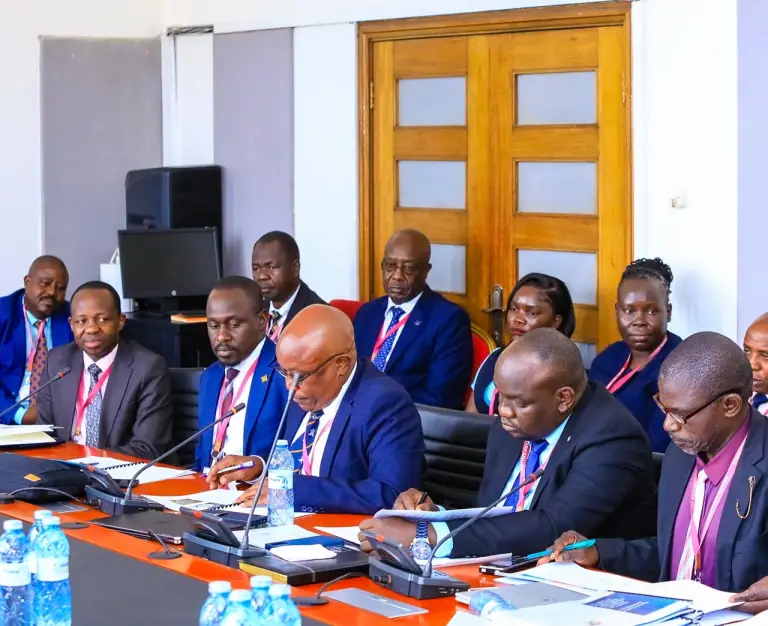
Appearing before the Parliamentary Committee on Health, chaired by Bukonzo East MP Dr Julius Monday Rude, the hospital’s Senior Executive Consultant (SEC), Dr Andrew Odur, outlined the financial and operational challenges facing the facility.
Serving a catchment population of approximately 2.6 million people, Lira Regional Referral Hospital requires Shs 6 billion annually for essential medicines, therapeutics and medical supplies. However, Parliament allocated only Shs 2.6 billion, leaving a shortfall of Shs 3.4 billion.
As a result, patients requiring specialised orthopaedic supplies are increasingly forced to pay out of pocket, even as hospital administrators continue public awareness campaigns emphasising that core services are provided free of charge.
The financial pressure is expected to intensify. Over the past three years, the hospital has conducted an average of 200 dialysis sessions each month for kidney patients, relying heavily on support from Kiruddu National Referral Hospital.
With Kiruddu gradually withdrawing its direct support, Dr Odur told MPs that Lira urgently needs an independent allocation of Shs 4.6 billion to sustain its dialysis services.
Even as funding remains inadequate, demand for specialised diagnostic services is increasing. The hospital’s Satellite Laboratory, which recently received accreditation from the South African National Accreditation System (SANAS) for more than 50 specialised tests, conducted extensive histopathology analyses over a three-month period.
The findings were concerning, with more than 60 per cent of the tissue samples examined testing positive for cancer.
However, the workforce responsible for managing this growing caseload remains severely understaffed. The hospital currently operates at only 27.7 per cent of its approved staffing capacity, leaving nearly three-quarters of its established positions vacant.
Even after completing its planned recruitment of 142 health workers during the current financial year, staffing levels are expected to rise to only 40 per cent.
Meanwhile, the hospital’s physical infrastructure is struggling to keep pace with the demands of modern healthcare. Dr Odur appealed to lawmakers for urgent funding to construct a new inpatient ward complex, noting that overcrowding is forcing patients to share limited space while medical staff continue working in buildings dating back to the 1920s.
Frequent voltage surges, which are beyond the hospital’s control, also threaten sensitive medical equipment, including a newly procured endoscopy machine.
Despite these challenges, hospital management highlighted internal reforms aimed at reducing resource wastage and increasing locally generated revenue.
The hospital’s expanded private wing generated Shs 1 billion in non-tax revenue, exceeding its projected Shs 880 million by Shs 120 million.
Administrators have also introduced anti-theft and anti-leakage measures, alongside community Barazas, to curb informal charges and rebuild public trust.
Over the past financial year, the facility also expanded its isolation unit and storage facilities, constructed a new parking lane and introduced a strict kavera-free environmental policy modelled on that of Kayunga Regional Referral Hospital.
For members of Parliament’s Health Committee, the presentation raises an urgent budgetary question ahead of the next appropriation cycle: whether to address the funding shortfalls in medicines and dialysis services before Northern Uganda’s primary referral hospital is forced to scale back critical care.