
 Tiger FM
Tiger FM
Tiger FM
1 May 2026, 12:31 pm
By Ronald Ssemagonja
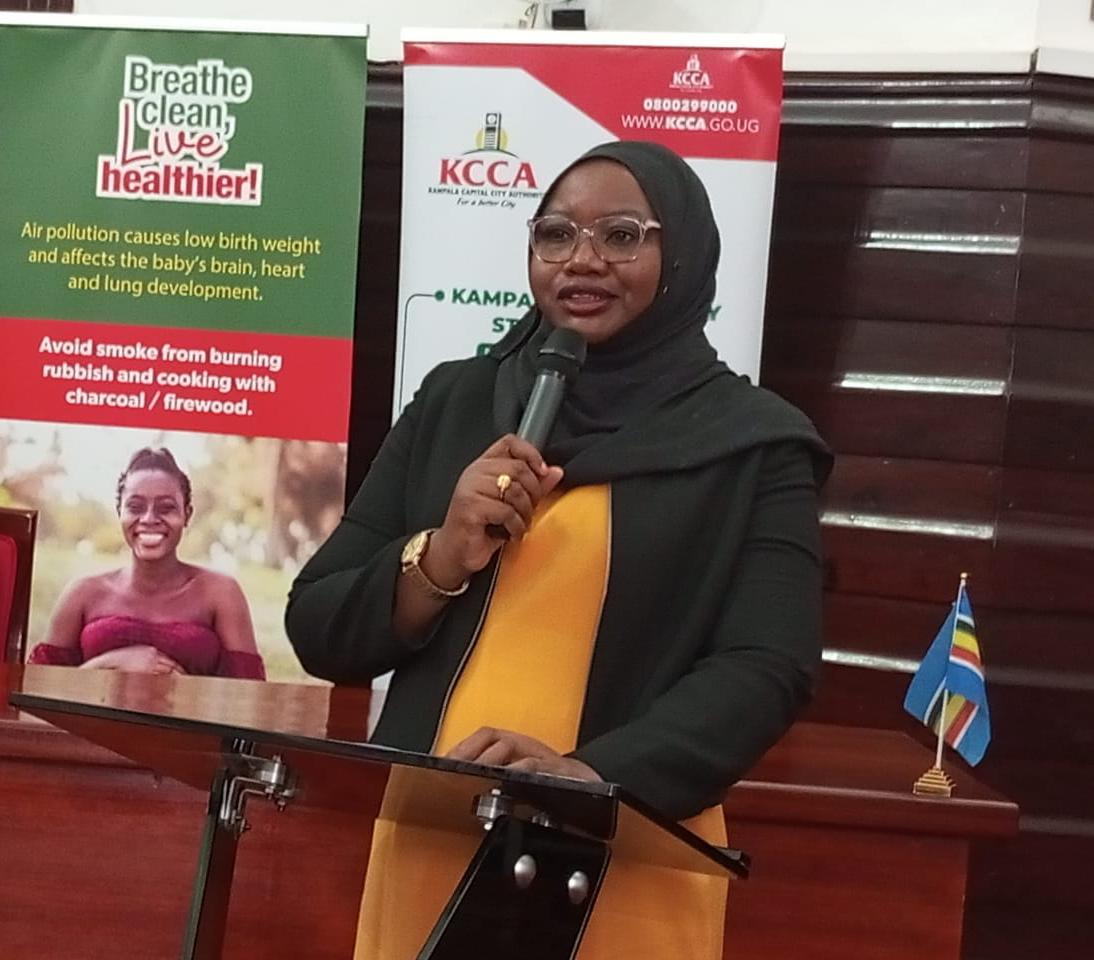
In an effort to curb air pollution in Kampala, the Kampala Capital City Authority (KCCA) Executive Director, Sharifa Buzeki, addressed participants during a multi-sector policy dialogue on air quality management held at City Hall yesterday.
Buzeki outlined the major causes of air pollution and highlighted the Authority’s planned interventions. The meeting brought together various stakeholders, including Makerere University, Kyambogo University, and the Ministry of Works, among others.
“I thank our stakeholders and partners for the support you have given us. I also thank the KCCA Director of Public Health and Environment, Sarah Zarwango, for her efforts. Your contribution is very important, but not enough—we all have a role to play. Nationally, we are managing, but globally, we are not. We are going to intensify public awareness and work with the Ministry of Energy to ensure compliance. Some electric buses will arrive by May 2026. We shall begin with eight of them, as approved by Cabinet, pending final clearance from the Ministry of Works. Together, we can build a more livable Kampala in the future,” she said.
Additionally, the KCCA Deputy Director of Public Health and Environment, James Bond Kunobere, urged both stakeholders and the public to take air quality management seriously.
“Air quality is critical. It has no boundaries—it will affect you wherever you are. Even when the President is moving in his convoy, he may control many things, but he cannot control the air. We all breathe the same air. As KCCA, our standards are still low. Industrial waste is another major concern, and physical and strategic planning must be taken seriously. Trade order is also key to improving air quality,” he noted.
Dr. Alex Ndyabakira, Supervisor of Medical Services at KCCA, was also commended for his support.
According to Prof. Baryomugisha, air pollution remains a “moving target,” noting that Uganda can learn from neighboring countries, particularly Rwanda. It is estimated that 20% of deaths in Kampala are linked to air pollution. The problem also contributes to low birth weight and negatively affects brain, heart, and lung development in infants.
“Smoke from cooking with charcoal and firewood pollutes the air we breathe. We need to move away from these fuels and adopt cleaner energy sources like gas. If we do not act, Uganda risks becoming a desert by 2050,” one participant warned.