
 Tiger FM
Tiger FM
Tiger FM
18 April 2026, 11:40 am
By Ronald Ssemagonja
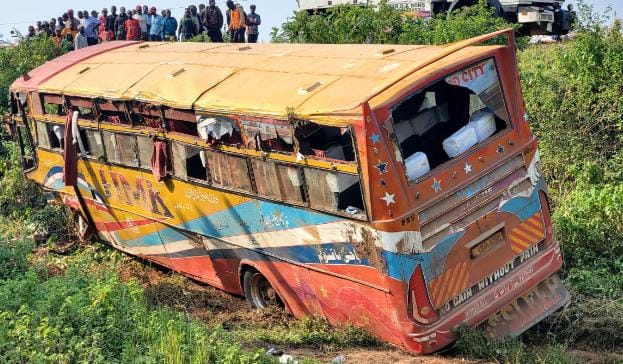
Parents across Uganda are voicing growing concern over the safety and value of school trips, especially for younger learners, following a bus accident last August in Zigoti in Mityana District, where a parked bus carrying school children was involved in a crash that left several pupils injured.
The incident has since sparked debate among parents, many of whom are now questioning the necessity and safety of what they describe as “unnecessary school tours,” particularly for children below the age of 13.
Agnes Nanteza, a concerned parent, says there is an urgent need for government intervention to regulate school trips. She argues that many of these excursions offer little academic value, especially for very young learners. According to her, toddlers should not be included in such activities, as they are unlikely to retain or benefit from the experiences educationally.
Her concerns are echoed by another parent, Kato Isa, who criticised what he described as the increasing commercialisation of school trips. He noted that schools are now organising trips almost every term, often to destinations that are poorly planned and irrelevant to the learners’ academic growth.
“Some trips are more about routine than real learning,” Kato said. “Why are children being transported at night in overloaded buses? You find up to 100 children in buses meant for 29 passengers, with no seat belts and little regard for traffic rules.”
Kato further recounted witnessing children stranded on highways due to breakdowns, describing how some were “carried like cargo.” He also raised concerns about poor hygiene, unhealthy meals, and inadequate supervision during these trips, warning that such conditions expose children to unnecessary risks and negative influences.
“Let’s be honest, these trips are turning into income streams for schools and teachers rather than meaningful educational experiences,” he added.
Parents also say the financial burden is becoming too heavy. With school fees already stretching many families, compulsory trips—often perceived as low-value—are seen as unfair. Kato revealed that he has opted his children out of such trips, though not without facing subtle pressure from schools.
He is now calling for clear reforms, including setting minimum age limits for participation, making trips voluntary, and ensuring professional planning with strict safety standards on transport, meals, and supervision.
“Children are better off traveling with their parents or guardians,” he said, adding that as someone in the tourism sector, he understands what a meaningful trip should look like—and many current school trips fall short.
However, a headteacher from a primary school in Kampala, who preferred to remain anonymous, offered a different perspective. He acknowledged that while toddlers may not benefit much from trips, schools often face pressure from parents to organise them.
“There are parents who insist on trips to places like Entebbe International Airport or the zoo,” he explained. “Schools sometimes take advantage of this demand, both to satisfy parents and to raise funds.”
He added that well-planned trips can still be beneficial for primary school learners, particularly from Primary Three and above, as they help children explore and understand their country. However, he strongly opposed international trips for young pupils and emphasised that participation should never be made compulsory.
Both parents and educators agree on one point: there is a pressing need for clearer guidelines and better regulation to ensure that school trips are safe, meaningful, and truly beneficial to learners.