
 Tembo FM
22 October 2026, 6:11 pm
By Odong James
The Japanese government has been commended for its contribution to infrastructure development in Kitgum District, particularly in the education and health sectors, through its Grant Assistance for Grassroots Human Security Projects (GGP).
During a media tour of Japanese-funded projects in the district on Thursday, October 22, 2026, local government officials and health workers highlighted the impact of the interventions on service delivery and access to essential facilities.
Through GGP, the Japanese government constructed a library at the Kitgum District headquarters in 2016 at a cost of approximately $92,000.
The facility is currently used by children, students and researchers to read, study and access a wide range of learning materials.
Kitgum District Education, Mr. Officer Anthony Lawot Lam, said the Japanese government had also supported Bola Primary School in Namokora Sub-county with two classroom blocks, desks and teachers’ houses, improving the learning environment.
Mr. Lawot said the school’s enrolment had increased from approximately 200 pupils before the intervention to more than 600, attributing the growth partly to improved infrastructure and learning facilities.
He added that the teachers’ accommodation had made it easier for staff to prepare lessons and other instructional materials in time, thereby improving the teaching and learning process.
Kitgum District Principle Assistant Secretary, who represented the Chief Administrative Officer during the engagement, Ms. Pamella Adokorach, appealed to the Japanese government to extend similar support to other schools in the district that continue to face shortages of classrooms, furniture and teachers’ accommodation.
New operating theatre boosts health service delivery
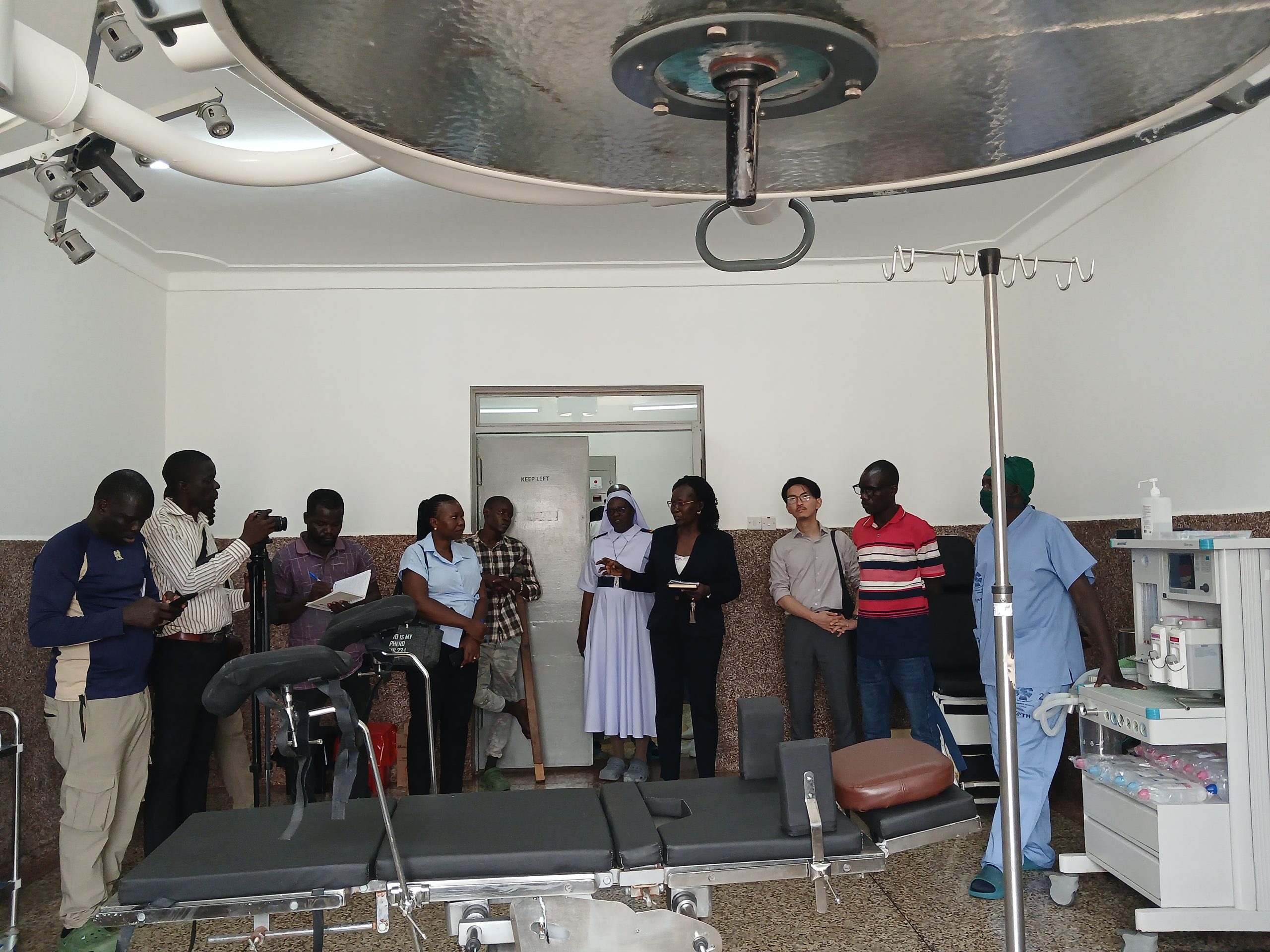
At St Joseph’s Hospital Kitgum, the Japanese government has constructed a modern operating theatre in 2024 equipped with essential supplies at a cost of approximately $91,000.
Dr Simon Komakech, an Obstetrician and Gynaecologist at the hospital, said the new theatre, which comprises three operating rooms, had significantly improved the hospital’s capacity to handle surgical procedures and respond to emergencies.
He contrasted the new facility with the old operating theatre, which had only one operating room, saying the expanded capacity had improved operational efficiency by approximately 30 per cent.
The hospital’s Medical Director, Dr Pamella Atim, described the facility as a dream come true for the institution and the wider population in East Acholi, Karamoja and neighbouring South Sudan.
Dr. Atim explained that the operating theatre has dedicated rooms for general surgery, orthopaedic surgery, and gynaecology and obstetrics, enabling the hospital to conduct up to three operations simultaneously, depending on staffing and other clinical requirements.
She added that the facility also includes a doctors’ room, a patient delivery room, changing rooms and other essential amenities to support medical personnel and patients.
Atim commended the Japanese government for its contribution to improving healthcare delivery in the region, noting that the facility would strengthen the hospital’s ability to serve patients requiring specialised surgical care.
Japan pledges continued support
The media tour was led by the Head of Cooperation at the Japanese Embassy in Uganda, Mr. Masanobu Yonemitsu, alongside other embassy officials.
Yonemitsu said the Japanese government remained committed to supporting Uganda not only through infrastructure development but also through interventions in other sectors aimed at improving people’s livelihoods.
He expressed satisfaction with the implementation of the projects and said the embassy would consider additional interventions, urging stakeholders to submit their proposals in writing for consideration.
Yonemitsu emphasised the importance of local ownership and sustainability, noting that the projects were intended for Ugandans, implemented by Ugandans and managed by Ugandans.
He called on beneficiaries and local authorities to take responsibility for maintaining the facilities to ensure they continue serving communities for years to come.
The Japanese government’s interventions in Kitgum underscore the role of international development partnerships in strengthening public infrastructure, improving access to education and healthcare, and enhancing service delivery in underserved communities.