

 Tembo FM
Tembo FM
Tembo FM
5 October 2026, 10:28 pm
Report by: Isaac Olweny
PALABEK OGILI, LAMWO — Economic violence has been identified as the most common form of gender-based violence affecting households in Ogili Central Cell, Palabek Ogili Sub-county in Lamwo District.
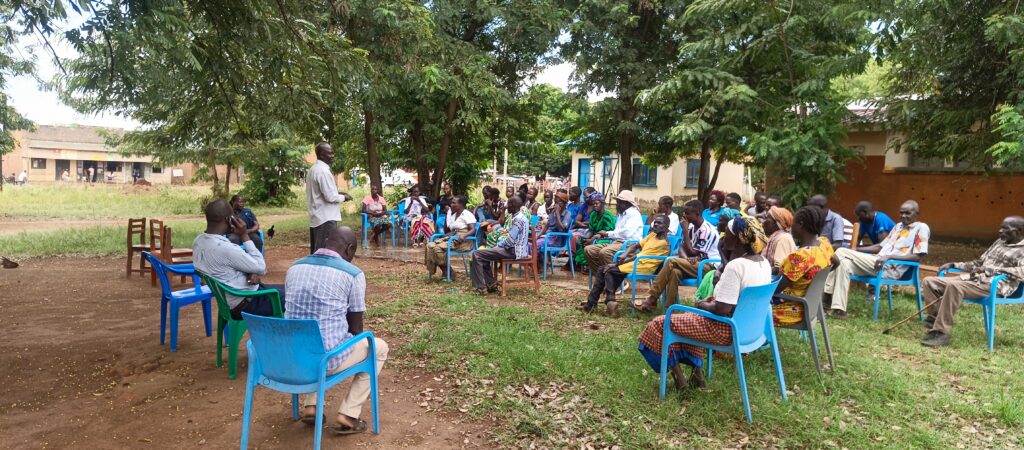
The finding emerged during a community dialogue organized today by Reproductive Health Uganda, bringing together residents to identify, rank and discuss the different forms of gender-based violence experienced in their community.
Residents engaged in a heated discussion on economic control within families, particularly over who should have the right to control and make decisions over household finances — whether the responsibility should rest solely with the husband, the wife, or be shared by both partners.
Child neglect was ranked as the second most common concern among the forms of gender-based violence identified by the community.
Speaking during the dialogue, Owor Patrick Nelson, Chairperson of Colmeal and an initiative of ADRA Uganda, urged households to build consensus on how families can pursue development without violence.
Owor said economic violence is a major factor contributing to conflicts in many families, adding that the Community-Led Transformation Approach is helping residents confront challenges including alcohol abuse, child neglect and other forms of gender-based violence.
He encouraged residents to take ownership of solutions to the problems affecting their households and community.
Bytes
Palabek Ogili Sub-county LC3 Chairperson Hon. Omal Christopher welcomed the dialogue, saying it provides residents with an opportunity to identify their own challenges and participate in finding solutions.
He called for a change in lifestyles and encouraged residents to embrace positive cultural practices that can contribute to safer and more stable families.
Omal said the engagement had helped to “reawaken” the community and expressed hope that residents would put into practice the issues discussed during the dialogue.
Meanwhile, Layet Ritah, the District Focal Person for Reproductive Health Uganda, said the SRHR Strength programme, implemented in partnership with ADRA Uganda, uses community dialogues to empower residents to identify their own problems and develop locally driven solutions.
She said the strength of the approach lies in giving community members space to speak openly about sensitive issues, adding that this makes it easier for them to collectively address the challenges they face.
The dialogue forms part of ongoing community engagement efforts aimed at strengthening household relationships, promoting gender equality and addressing gender-based violence through community-led solutions