

 Shine FM
26 November 2026, 2:08 pm
By Solomon Okello
Oyam – Uganda
Unclear leadership, weak management and inadequate community ownership at the Tochi Irrigation Scheme are raising concerns about the effective utilisation of the government investment, despite its potential to improve household incomes and livelihoods in Oyam District.
The concerns emerge amid evidence that farmers are already benefiting from the irrigation facility, with some recording promising harvests that demonstrate its economic value to local communities.
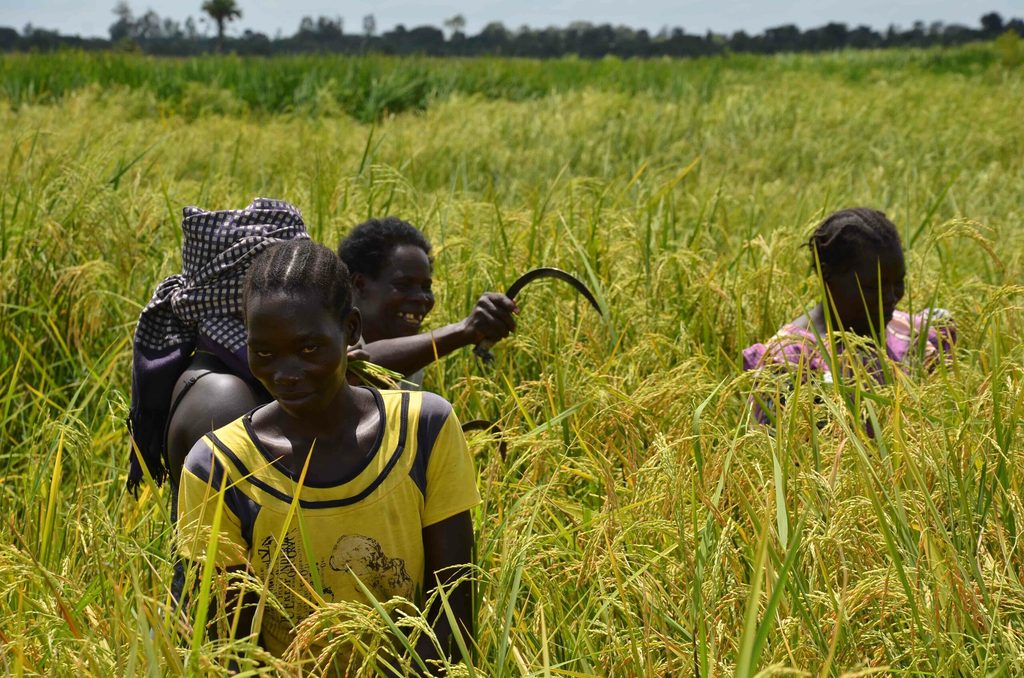
Atim Collins, a 40-year-old mother of six who joined the scheme in June 2026, expects to earn approximately 5.44 million shillings from her first rice harvest.Atim harvested 39 bags of unthreshed rice, which are expected to produce 17 bags of processed rice, each weighing 100 kilogrammes.
At the prevailing market price of 3,200 shillings per kilogramme, she projects gross earnings of 5.44 million shillings, which she plans to invest in her children’s education and expand her farming activities.
However, despite such promising returns, farmers continue to face low farm-gate prices, high transportation costs and challenges accessing reliable markets, raising questions about the level of institutional support available to maximise the scheme’s benefits.
During a field inspection on November 20, 2026, officials from the Ministry of Water and Environment, led by Regional Manager Engineer Patrick Okotel, also raised concerns over vandalism and theft of public infrastructure at the facility.
Some of the reported incidents include damaged water regulators and stolen roofing materials from community sanitation blocks.
The officials further expressed concern over what they described as excessive dependence on government intervention for routine activities such as land levelling, which should partly be addressed through stronger farmer participation and community management structures.
The concerns point to the need for effective leadership, accountability and stronger cooperation among farmers, water user associations, cooperatives and local authorities to safeguard the facility and ensure its sustainability.
Established between 2017 and 2023 under the Farm Income Enhancement and Forestry Conservation Programme Phase Two, the 500-hectare irrigation scheme draws water from River Tochi and serves communities in Acaaba and Ngai sub-counties and Minakulu Town Council.
The facility was designed to enable farmers to produce throughout the year, reduce dependence on unpredictable rainfall and protect fragile wetlands from agricultural encroachment.
It also provides opportunities for diversified agricultural enterprises, including greenhouse horticulture, beekeeping and fish farming.
Atim’s experience demonstrates the economic opportunities created by the scheme, particularly for households previously dependent on rain-fed agriculture.
However, without clear leadership, effective coordination, market linkages and responsible management of shared infrastructure, the full value of the public investment risks being undermined.The Ministry of Water and Environment has consequently called on local leaders and farmer organisations to take greater ownership of the facility, protect public assets and actively participate in managing the irrigation infrastructure.
For communities in Oyam, the challenge now goes beyond accessing irrigation water to ensuring that the scheme is properly managed to deliver sustainable economic benefits to the people it was established to serve.