
 Mama FM
19 November 2026, 4:37 pm
Uganda has continued to commit substantial public resources towards water access, sanitation and agricultural transformation. Yet, in Karamoja, northeastern Uganda, women and girls continue to bear the heaviest burden of water scarcity, food insecurity and increasingly unpredictable weather patterns. This raises an important question if government is investing billions of shillings in development, why are vulnerable households still struggling to secure water, food and sustainable livelihoods?
Uganda is not short of water resources or agricultural potential. However, climate change, prolonged dry spells, poor rainfall distribution and environmental degradation are increasingly undermining the livelihoods of communities that depend on rain-fed agriculture and livestock. In Karamoja, these challenges are no longer just environmental concerns they are threatening household incomes, food systems, education and the dignity of women and girls.
The water situation presents another worrying picture although government reports that national access to safe water increased to 73.6 per cent by September 2026, 12,339 villages and cells still lacked a single improved safe-water source as of June. For communities in Karamoja, limited water availability affects not only domestic consumption but also livestock production, food security and household economic stability.
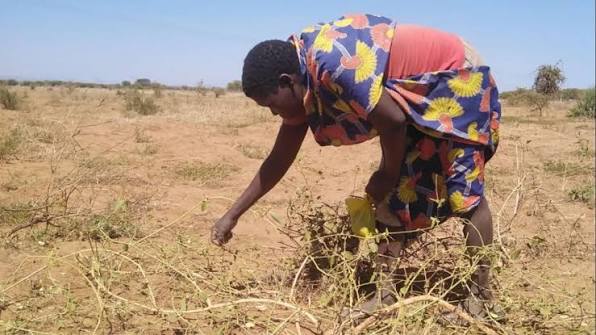
For women and girls in Karamoja, the climate crisis has caused a deeply unequal face. When water sources dried up, women and girls walk longer distances in search of water for their households and livestock. This has taken away valuable time that could be spent in education, farming, income-generating activities and rest. Longer journeys have also exposed them to harassment, violence and other protection risks.
Food insecurity has created another layer of vulnerability where women, who play a central role in household food production and care have often sacrificed their own meals when food becomes scarce. Pregnant women, breastfeeding mothers and adolescent girls have faced additional nutritional challenges. When families lose livestock or experience crop failure, women who have limited access to land, productive resources and alternative sources of income are often among the most affected.
Girls are equally at risk as households struggle with poverty and food shortages, some girls may experience increased school absenteeism, early marriage and other forms of exploitation. Climate shocks can therefore reverse progress made in education, gender equality and women’s economic empowerment.
To address this crisis, government must move beyond measuring progress through the amount of money allocated and focus on the actual impact of these investments.
Water infrastructure must be prioritized in the most vulnerable communities. Solar-powered boreholes, community water harvesting systems, valley tanks and small-scale irrigation schemes can reduce the distance women travel to access water while supporting livestock and food production. These facilities must have reliable maintenance systems and meaningful community participation.
Additionally, Agricultural investments should strengthen climate-resilient food systems. Government should expand access to drought-tolerant crops, sustainable livestock management, pasture restoration, agricultural extension services and affordable irrigation. Women farmers and pastoralist communities must be supported with the resources and knowledge needed to adapt to changing weather patterns.
Furthermore, climate adaptation programmes must deliberately address gender inequalities. Women and girls should not simply be treated as beneficiaries of development projects but as decision-makers, innovators and leaders in building community resilience. This requires improving women’s access to land, agricultural financing, climate information, clean energy and livelihood opportunities.
Finally, government must strengthen accountability in publicinvestment.Communities need to know which projects are being implemented, how much has been spent, who benefits and whether the infrastructure is functioning. Investment should be informed by the experiences of women and girls who understand the daily realities of water shortages and food insecurity.
Uganda’s financial commitments towards water and agriculture are important but their true value must be reflected in households with reliable water, families with sufficient food and women and girls who can pursue their livelihoods and education without carrying the disproportionate cost of climate change.
The success of government investment should not only be measured in billions of shillings spent, but in the number of women who no longer walk kilometers for water, girls who remain in school and households that can withstand prolonged dry spells without falling into hunger.
Written by:
SHALLON AINEMBABAZI