
 Tiger FM
Tiger FM
Tiger FM
15 October 2026, 9:26 am
By Ronald Ssemagonja
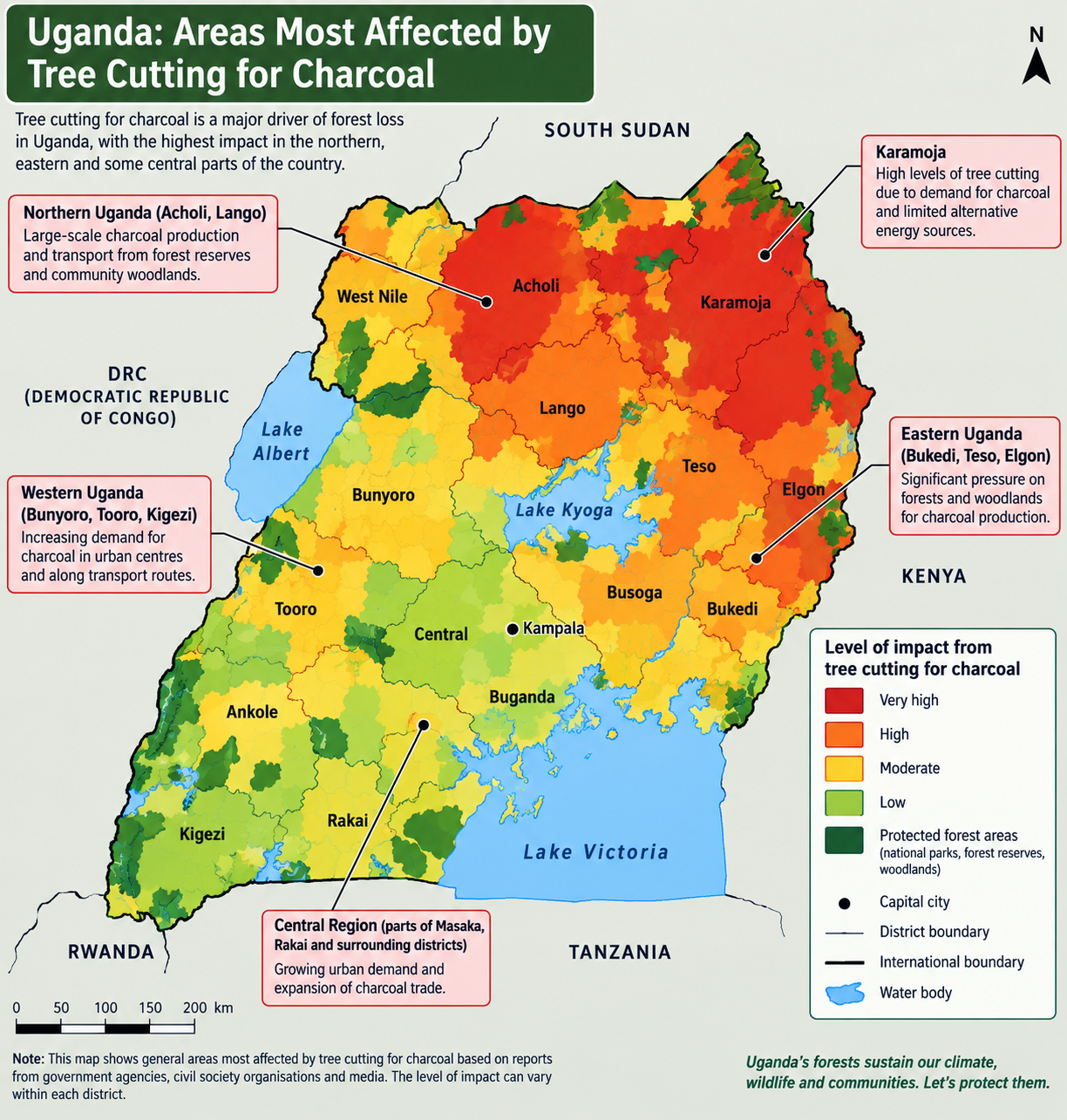
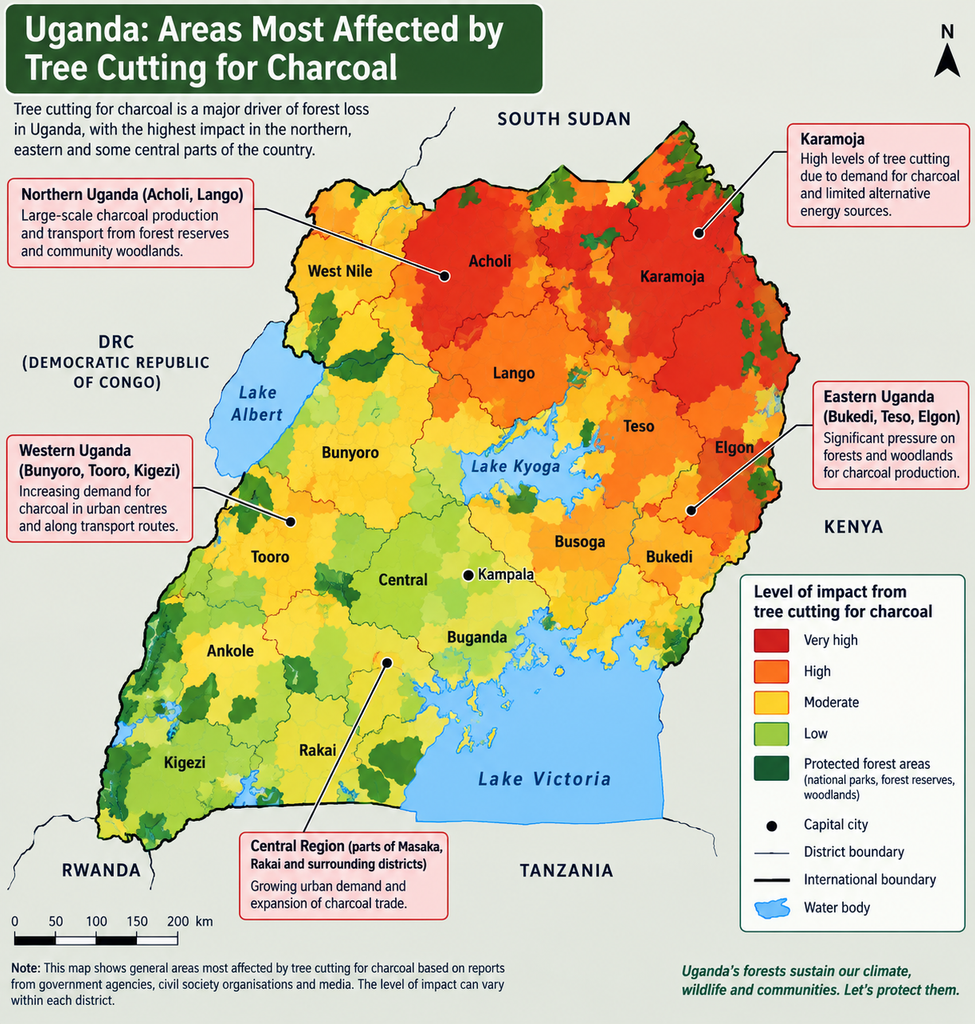
Ugandans have expressed mixed reactions to the government’s efforts to restrict charcoal transportation, particularly from northern Uganda, citing concerns about alternative cooking methods and the cost of living.
Recently, Uganda Police Force spokesperson ASP Kituuma Rusoke warned that people found transporting charcoal illegally would be arrested. He made the remarks during a media briefing by the Uganda National Examinations Board (UNEB), where learners were also cautioned against examination malpractice.
Rusoke pointed out the dangers associated with charcoal transportation, including road accidents, as authorities intensify efforts to enforce the law and protect the environment.
The announcement has sparked debate among members of the public, with some questioning how households will manage to prepare meals if charcoal becomes difficult to access.
Some Ugandans have suggested that the government should make gas cylinders more accessible across the country as an alternative cooking option. However, concerns remain about the weight of gas cylinders, their affordability and whether many households can easily adopt the alternative.
Others have called on the government to consider additional measures, including reducing taxes on locally manufactured products, to make alternative cooking methods more affordable.
Meanwhile, some members of the public argue that protecting Uganda’s environment should be a collective responsibility rather than a task left to the police or other government agencies. They have cited tree planting as one of the ways communities can contribute to environmental conservation.
Speaking to the media this week, Uganda Peoples Congress spokesperson Sharon Ayat also emphasised the need for adequate preparation before implementing measures that affect people’s livelihoods.
The debate highlights the need to balance environmental protection with the practical challenges faced by households that depend on charcoal for cooking.