
 Tiger FM
Tiger FM
Tiger FM
16 September 2026, 9:24 am
By Ronald Ssemagonja
Environmental protection is an important part of education because it helps learners develop knowledge, practical skills, positive attitudes and responsible behaviour towards their surroundings.
Dickens Ochero, an environmental protection advocate, has advised schools to use Uganda’s new competency-based curriculum to engage learners in practical activities that promote environmental conservation.
Ochero says the curriculum gives learners opportunities to apply what they learn in real-life situations, including caring for the school environment.
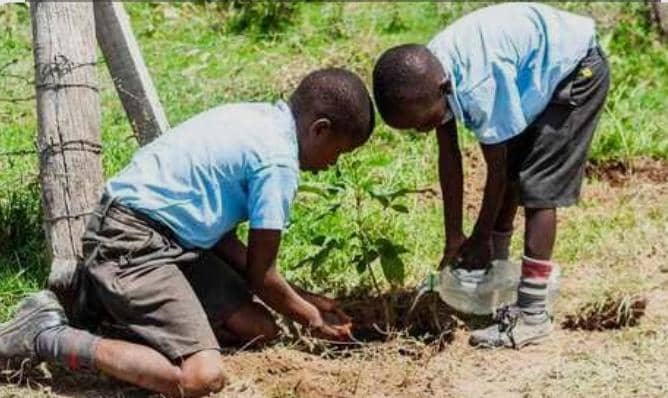
He says schools can involve learners in tree planting and caring for trees by planting trees around school compounds, establishing tree nurseries, watering and protecting young trees, and learning about the importance of forests and trees.
He says these activities can be linked to subjects such as Agriculture, Science and Geography, while also developing practical learning skills.
Ochero also encouraged schools to teach learners proper waste management.
He says learners can be encouraged to use designated rubbish bins, separate biodegradable and non-biodegradable waste, reuse bottles, paper and containers, and make useful items from waste materials.
He says these activities can be linked to Science, Technology, Art and Design, as well as life skills.
Ochero further advised schools to establish gardens, including vegetable gardens, flower gardens, fruit tree gardens and demonstration gardens.
He says through such gardens, learners can be taught compost making, soil conservation and sustainable agriculture, while gaining skills in Agriculture, Biology, Science and entrepreneurship.
He also encouraged learners to participate in keeping school compounds clean by cleaning classrooms and compounds, clearing blocked drainage channels, removing litter from playgrounds and maintaining clean toilets and water points.
According to Ochero, such activities help learners develop responsibility, teamwork and good hygiene practices.
He also urged schools to promote water conservation by teaching learners to close taps after use, report or repair leaking taps, harvest rainwater where possible and avoid wasting water during cleaning.
He said these activities can support learning in Science, Geography and health education.
Ochero added that schools can also teach learners about saving energy by encouraging them to switch off lights and electrical appliances when they are not in use, use natural light where possible and educate others about energy conservation.
He further encouraged schools to establish environmental clubs where learners can organise tree-planting activities, conduct environmental debates, write poems and songs about conservation and participate in environmental campaigns.
He said such activities promote communication, creativity, leadership and teamwork, citing initiatives such as Go Green Clubs and chapters.
On soil conservation, Ochero said learners can plant grass to control soil erosion, avoid unnecessary cutting of vegetation, construct simple erosion-control structures and practise mulching in school gardens.
He said these activities can be linked to Agriculture, Geography and Science.
Ochero also encouraged schools to use environmental projects as part of learning under the new curriculum.
He said learners can undertake projects such as making dustbins from used materials, constructing useful items from plastic bottles and cardboard, establishing school nurseries, investigating sources of pollution around schools and making compost manure.
According to Ochero, such projects help learners solve real-life problems using locally available materials.
He further urged learners to sensitise the wider school community about environmental protection, including fellow students, teachers and parents.
He said learners can use school assemblies, drama, posters, debates and newsletters to educate communities about pollution, climate change, proper waste disposal and the importance of protecting wetlands, trees and water sources.
Ochero also called on schools to protect biodiversity by discouraging the unnecessary destruction of plants, protecting harmless birds and insects, establishing gardens that attract pollinators and avoiding bush burning within school compounds.
He concludes that primary and secondary school learners can play a major role in environmental protection by participating in practical activities such as tree planting, waste management, school gardening, water conservation and environmental clubs.
He says Uganda’s competency-based curriculum is not only about teaching environmental knowledge but also giving learners opportunities to apply skills, demonstrate responsibility, solve problems and become responsible citizens who protect the environment.