
 Tiger FM
Tiger FM
Tiger FM
17 October 2026, 1:53 pm
By Ronald Ssemagonja
Uganda’s economy has historically relied on agriculture, with farmers growing coffee and cotton for export. Tourism developed later, with Murchison Falls becoming a national park in 1952.
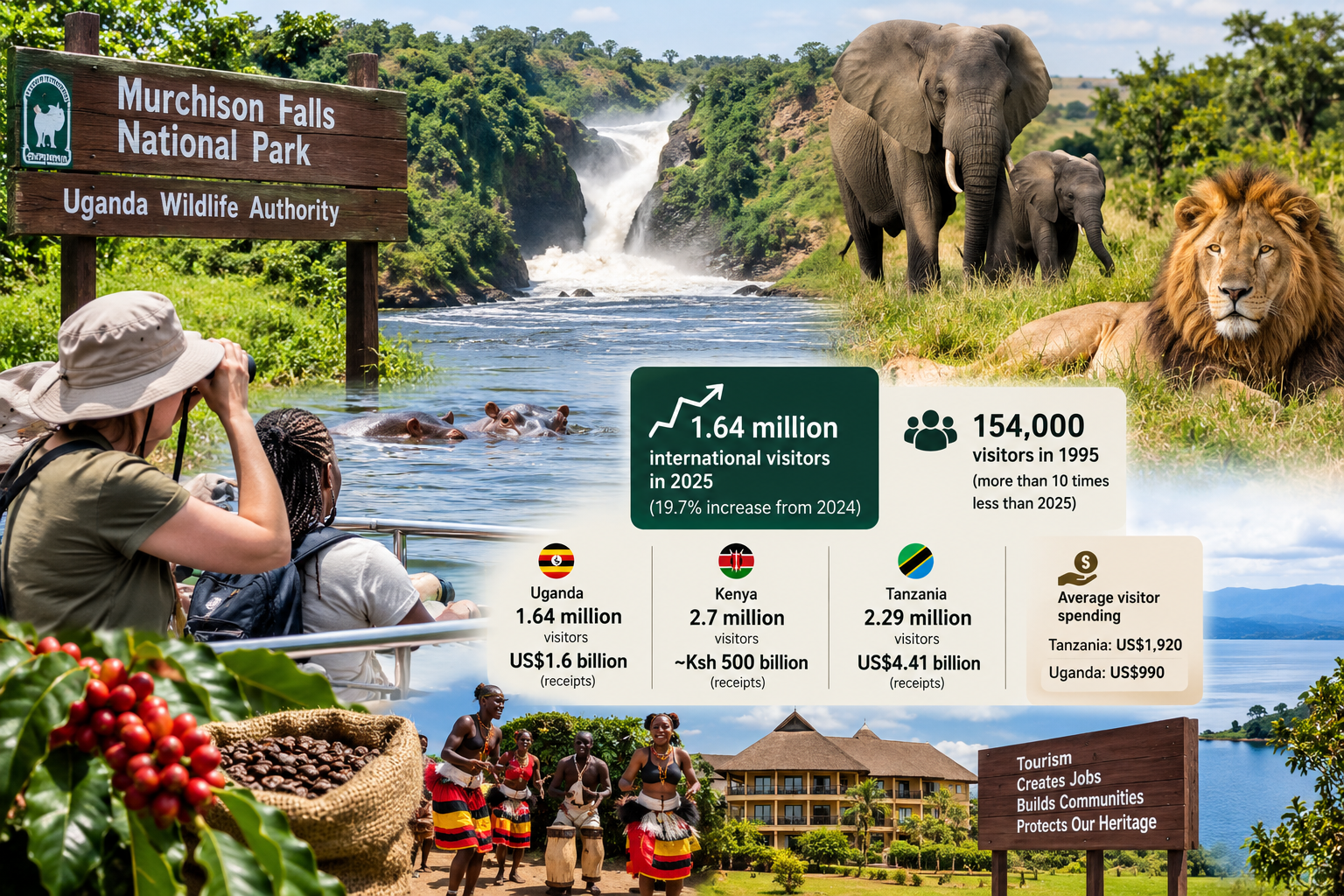
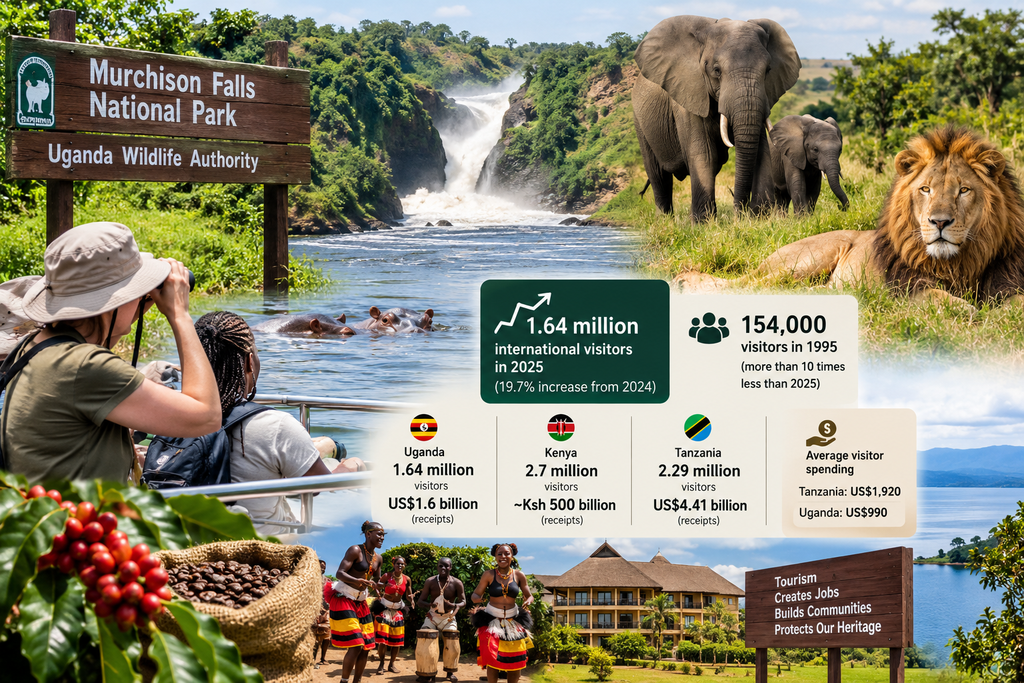
In 1995, Uganda recorded 154,000 international visitors. The 1.64 million visitors recorded in 2025 represent more than ten times that figure, highlighting the sector’s growth over three decades.
The country has also developed its tourism institutions, including the Uganda Wildlife Authority, the Uganda Tourism Board and training programmes for people working in the hospitality industry.
According to the Ministry of Tourism, Wildlife and Antiquities’ 2025/26 performance report, Uganda recorded 1,642,215 tourist arrivals in 2025, representing a 19.7 per cent increase from 2024. The figure was also 106 per cent of the pre-pandemic level recorded in 2019.
Tourist arrivals had fallen to 473,085 in 2020, the first year of the COVID-19 pandemic.
Despite the recovery, Uganda’s tourism figures remain below those of some regional competitors. Kenya received approximately 2.7 million visitors, while Tanzania recorded about 2.29 million.
Uganda generated approximately US$1.6 billion in tourism receipts in 2025, compared with Tanzania’s US$4.41 billion. Kenya’s tourism receipts stood at approximately 500 billion Kenyan shillings.
Differences in visitor spending also highlight the gap. Tanzania’s visitors spent an average of about US$1,920 per person, compared with approximately US$990 in Uganda.
Under its Tenfold Growth Strategy and the Fourth National Development Plan, Uganda is seeking to expand the tourism sector’s contribution to the economy, with a target of US$50 billion in tourism receipts.
Wildlife conservation remains another important measure of the sector’s performance. The report indicates that Uganda had 291 lions against a target of 542, while the elephant population stood at 6,352 against a target of 8,175.
The figures point to continued challenges in wildlife conservation, even as the country seeks to attract more visitors and increase tourism revenue.
The Ministry projects that ongoing development efforts will contribute to a stronger economy by 2040, with tourism expected to play a significant role in the country’s long-term growth.